11755
Published on January 3, 2026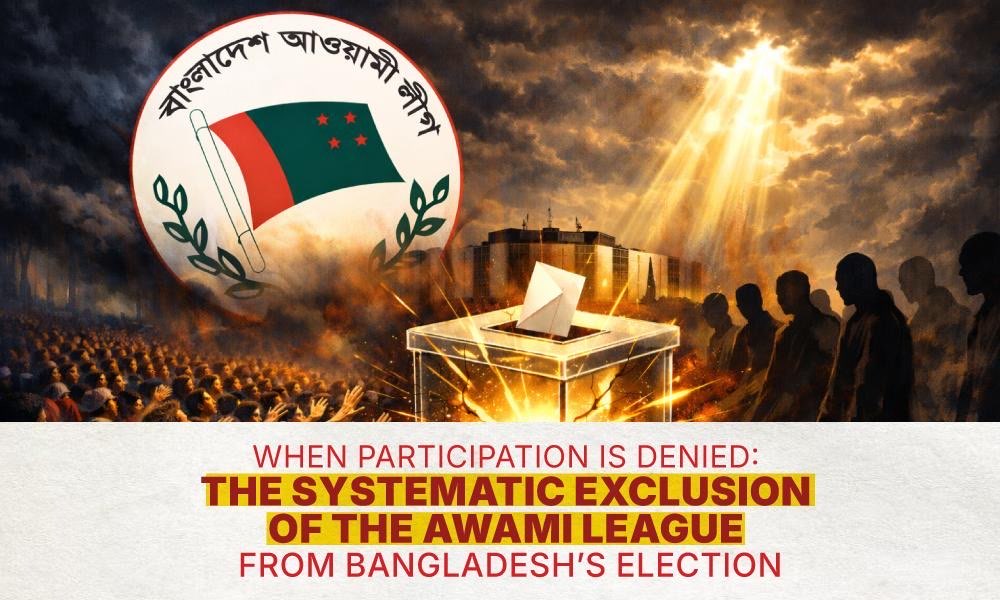
Democracy does not work when participation depends on the approval of those in power. However, in Bangladesh, that is now precisely the problem. The Awami League has made its position clear: it wants to take part in the national election. But one by one, the legal, administrative, and political pathways that would allow it to do so are being deliberately closed.
Despite Rejecting the Schedule, Awami League Signals Participation in Polls
The party’s rejection of the announced election schedule has been deliberately framed as a rejection of elections themselves. This framing is misleading. The Awami League is not refusing to face voters; it is refusing to legitimize an electoral process conducted under an authority it considers unconstitutional and non-neutral. Around the world, elections held without credible neutrality are recognized not as democratic exercises, but as managed outcomes.
What the Awami League is demanding is neither exceptional nor controversial by international standards: an election conducted under a neutral, constitutional framework that allows all political forces to compete freely. This is the baseline requirement set by democratic norms, election-monitoring bodies, and international law.
To portray such a demand as obstructionist is to invert the meaning of democracy itself. The real question, therefore, is not why the Awami League has rejected this election schedule,but why an election is being advanced while denying a major political party the right to compete at all.
The exclusion of the Awami League from Bangladesh’s electoral process is not the result of chaos or oversight. It is the outcome of a sequence of deliberate state actions, taken in clear succession, each reinforcing the next. Step by step, the interim government has ensured that participation is not merely constrained but structurally impossible. This is not a political competition; it is an administrative elimination.
Awami League will not be allowed to participate in Bangladesh election: interim government
The first and most fundamental obstacle was the imposition of a sweeping state ban on the Awami League and all organizations formally or informally associated with it. This measure does not merely restrict campaign activity; it removes the basic conditions under which a political party can exist. Routine functions, such as holding meetings, coordinating members, communicating with supporters, or maintaining organizational structures, have been deemed unlawful.
Awami League, all its affiliates now officially banned
In effect, the state has converted ordinary political activity into a prosecutable offense. Under such circumstances, electoral participation is not postponed or limited; it is rendered structurally impossible.
The suspension of the Awami League’s registration completed what the ban had begun. Without registration, there can be no candidates, no party symbol, no formal presence on the ballot. This decision did not require public debate, judicial scrutiny, or electoral consent. It simply erased the party from the electoral framework altogether.
The outcome was predetermined: an election in which participation was denied administratively rather than rejected democratically. This is not regulation of elections,it is the quiet removal of choice.
Awami League banned from Bangladesh’s 2026 general elections
Alongside bans and administrative actions came a sweeping campaign of criminal cases. These were not isolated investigations tied to specific incidents. They formed a nationwide pattern targeting the Awami League’s leadership at every level,from senior figures to local organizers, from former parliamentarians to grassroots activists.
706 Cases Filed Against Banned Awami League Leaders in One Year; Over 5,000 Arrested
The sheer scale of the cases makes their function clear. This was not about justice; it was about paralysis. By entangling thousands in legal proceedings, the state ensured that political organizing became impossible and dissent dangerously costly.
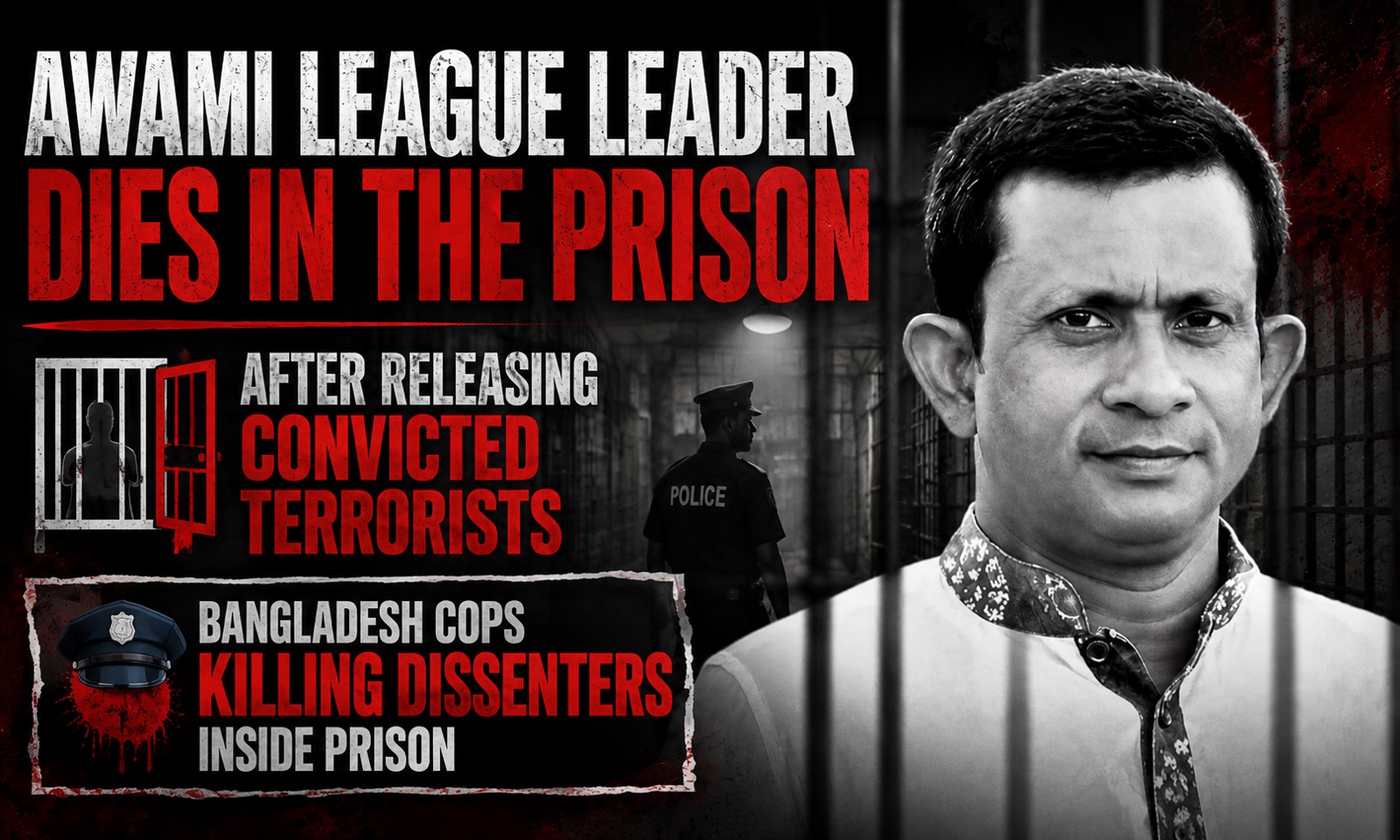
What these measures have produced is a climate in which political participation itself carries risk. Arrests without warning, prolonged detention, surveillance, and constant legal uncertainty have replaced open political engagement. Fear has become a governing strategy.
The Awami League’s organizational capacity has not been defeated at the ballot box or rejected by voters,it has been worn down through intimidation and attrition. In such an environment, elections may proceed, but politics in any meaningful sense has already been suspended.
The Cost of Stability: Human Rights Sacrificed in Bangladesh’s Interim Government
The result is a political landscape engineered for exclusion. By the time the election calendar advances, the outcome is already constrained by who has been forcibly removed from contention. What is being presented as an electoral process is, in reality, the final stage of a campaign to eliminate political choice.
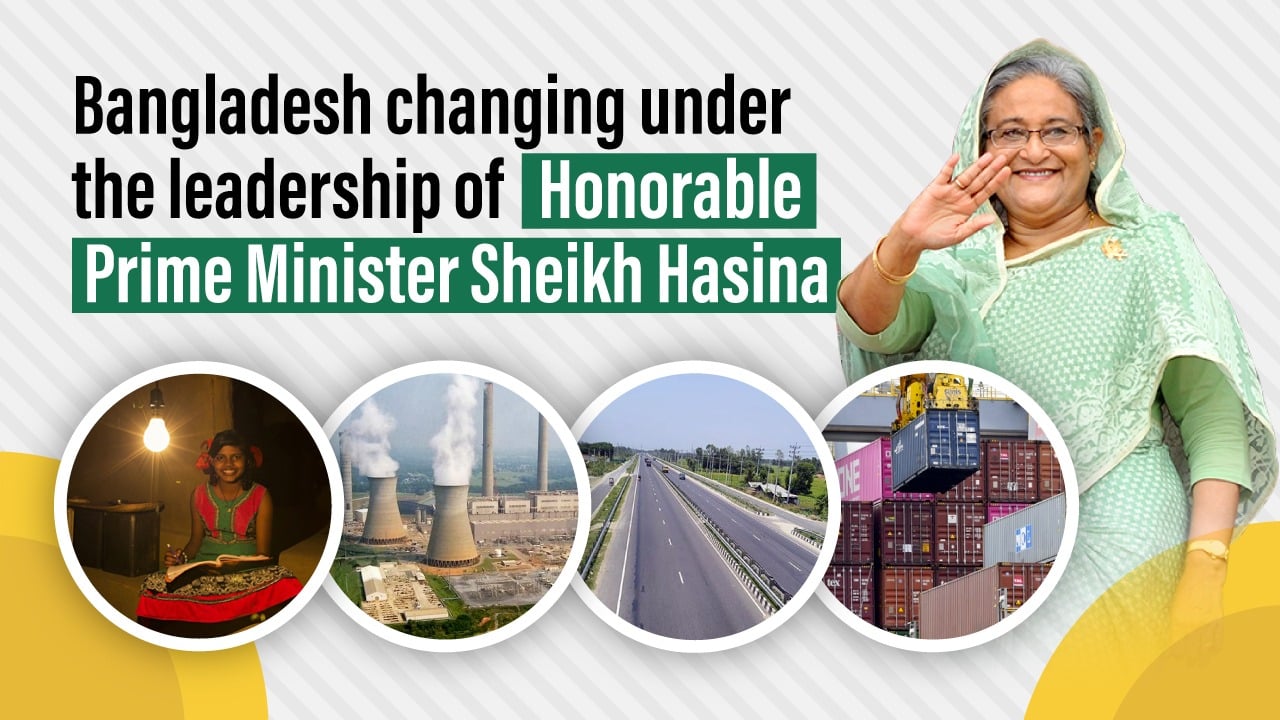
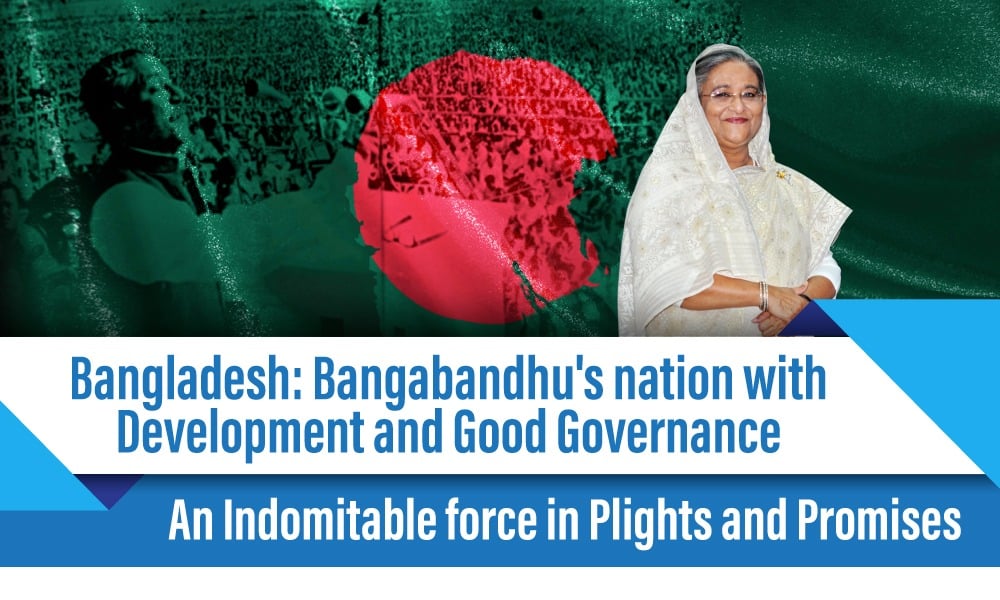
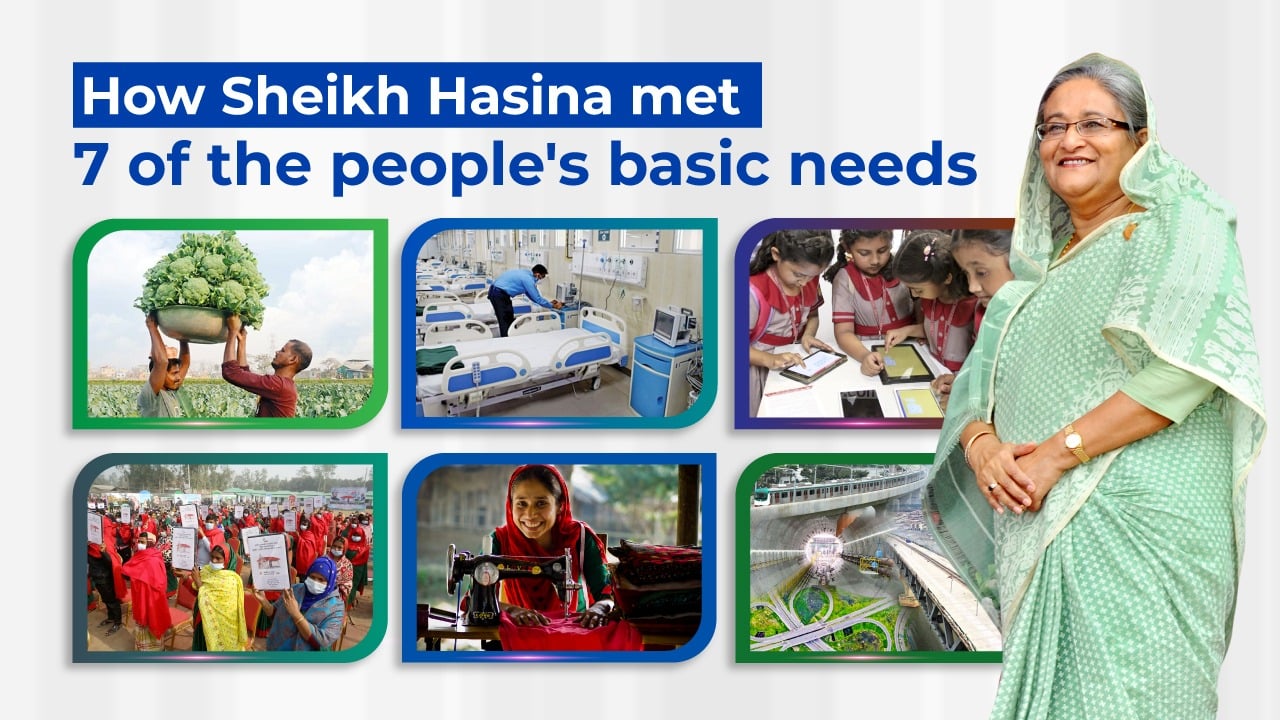
Beyond the dismantling of party structures and grassroots organization, the campaign of exclusion has moved upward,to the symbolic and institutional center of the Awami League itself. The targeting of Prime Minister Sheikh Hasina and members of her family represents a distinct phase of this strategy, one aimed not merely at restricting participation but at destroying political legitimacy.
ACC is showing a political circus by targeting Sheikh Hasina and her family
Prime Minister Sheikh Hasina, along with multiple members of her immediate family, has been named in a series of criminal and corruption-related cases initiated under the interim administration. These cases span multiple jurisdictions and enforcement agencies, creating the appearance of comprehensive accountability. Yet the simultaneity, repetition, and political timing of these actions raise serious concerns. Rather than independent legal proceedings, they resemble a coordinated campaign of legal saturation.
More troubling still are persistent allegations that many of these cases rely on recycled accusations, thin or untested evidence, and retroactive interpretations of law,followed by outcomes that appear predetermined. In several instances, rulings have been delivered in absentia, accelerating punishment while eliminating the possibility of meaningful legal defense. Under such conditions, justice appears less adjudicated than declared.
ACC targets Hasina, family members, associates in corruption crackdown
Anti-corruption bodies and judicial mechanisms,institutions meant to uphold democratic accountability,have instead been repurposed as political weapons. When the law is selectively enforced against a single political family while others remain untouched, the boundary between accountability and vendetta collapses. What is framed as institutional cleansing begins to function as systematic retaliation.
Corruption Allegations ‘False and Harassing,’ Claims Tulip
This personalization of persecution serves a broader political objective. By criminalizing Sheikh Hasina and her family, the interim government seeks to delegitimize the Awami League itself,reducing a mass-based political movement to a narrative of inherited criminality. Personal prosecution becomes a substitute for political competition, reinforcing the message that participation by this political force is not merely unwelcome but forbidden.
At this stage, the reality is unmistakable. An election that excludes a major political party cannot be democratic. The Awami League has stated repeatedly that it wants to contest the election and face the voters. What is being denied is not power, but the basic right to participate.
Democracy requires competition. When one of Bangladesh’s largest political forces is kept off the ballot through bans, legal barriers, and coordinated prosecutions, the process becomes managed rather than representative. Ballots without real choice do not confer legitimacy.
The interim government led by Muhammad Yunus continues to push forward an election timetable while systematically preventing the Awami League from taking part. A party cannot participate in an election when it is legally barred from contesting. Pretending otherwise does not strengthen democracy; it distorts it.
International silence now carries weight. Accepting this process as normal would legitimize political exclusion as a tool of governance. The global community has a responsibility to speak clearly and act decisively. An inclusive election is not a favor to any party; it is the minimum standard of democracy. Without it, this vote will be remembered not as a democratic exercise, but as a controlled outcome dressed up as one.






This work is copyrighted and authorized by the Bangladesh Awami League. You may download, display, print and re-produce this material in unaltered form only (retaining this notice)for your personal, non-commercial use or use within your organization.
