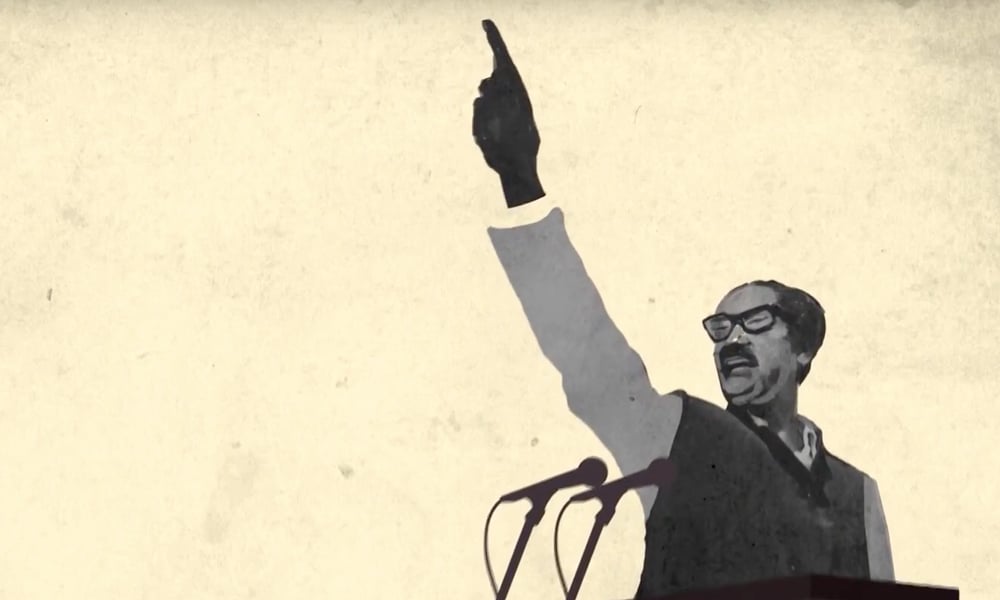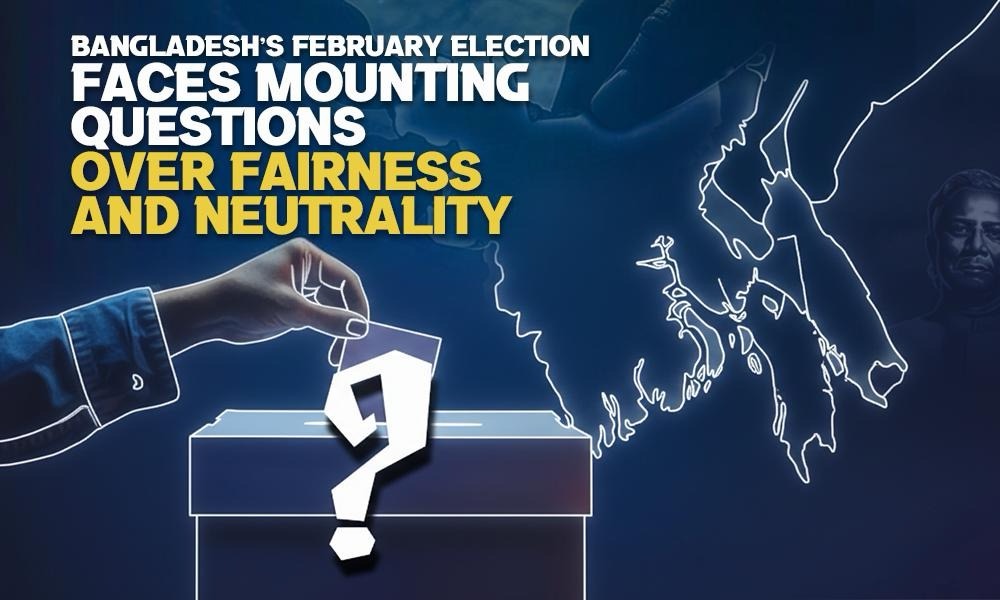
As Bangladesh heads to the February 12, 2026 election under Muhammad Yunus’s interim government, concerns grow over transparency, administrative neutrality, violence, postal voting risks, and whether the vote will truly reflect the people’s will.
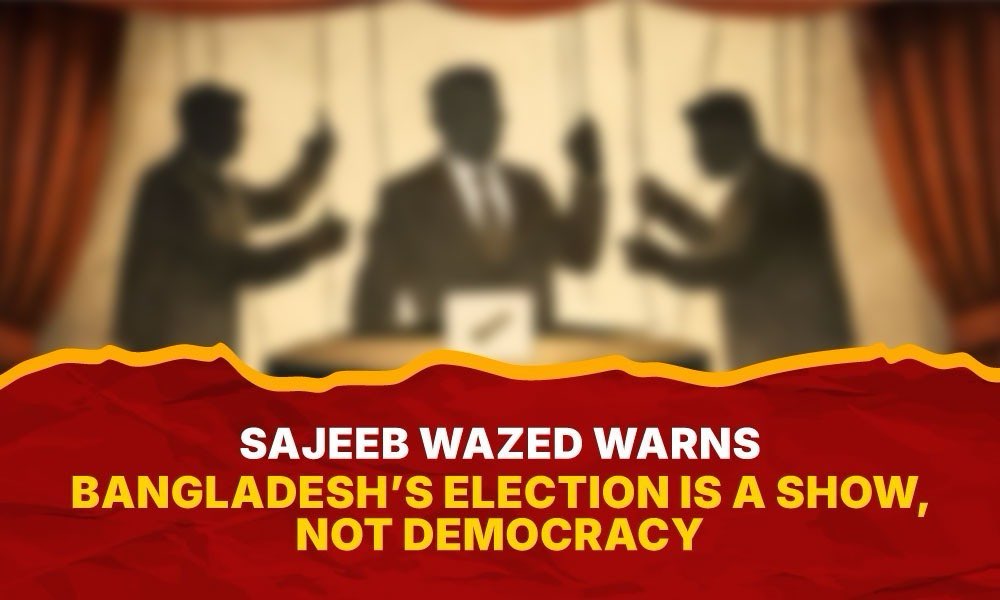
In his public appearance at a discussion on a book that brought to light the ongoing minority persecution and unprecedented rise of Islamists, Sajeeb Wazed appeals to international community to raise voice against the upcoming “sham” polls that has been rigged to install a weak government that would remain loyal to foreign masters US...
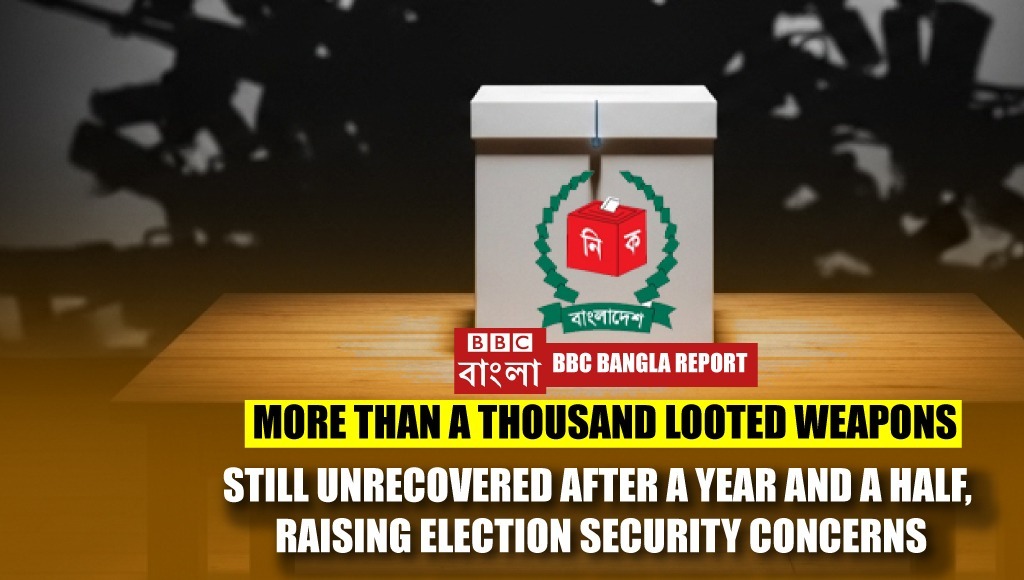
More than a year and a half after firearms and ammunition were looted from police during the July mass uprising in Bangladesh, law enforcement agencies have failed to fully recover them. Over one thousand firearms and more than two hundred thousand rounds of ammunition remain unaccounted for. Security analysts warn that if these weapons are not...
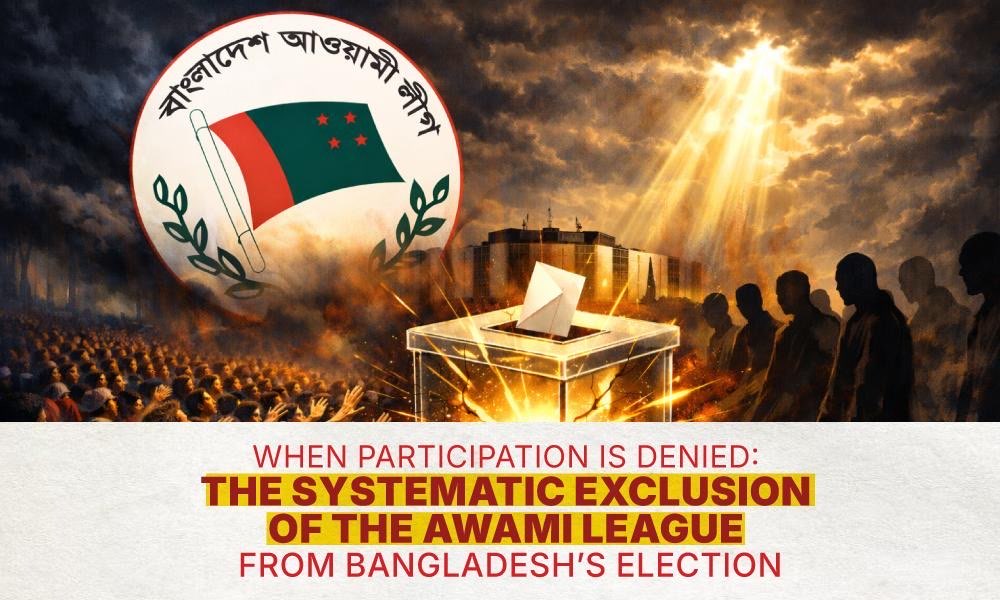
Democracy does not work when participation depends on the approval of those in power. However, in Bangladesh, that is now precisely the problem. The Awami League has made its position clear: it wants to take part in the national election. But one by one, the legal, administrative, and political pathways that would allow it to do so are being del...
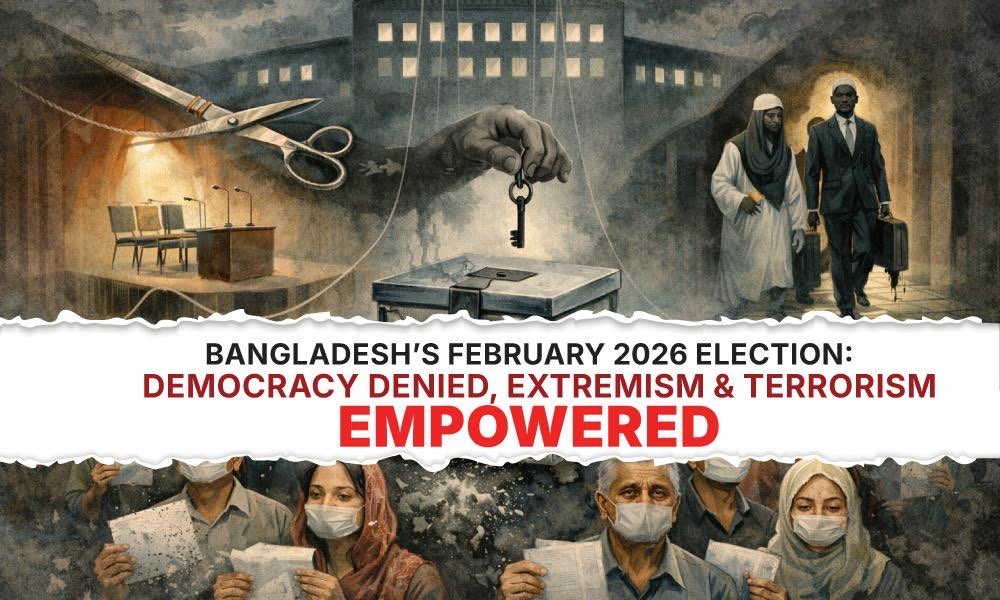
Bangladesh’s February 2026 election is being sold as a return to democracy, but in reality, it is built on exclusion. By banning the Awami League, the country’s largest political party with the support of nearly 60% of voters, the Yunus government has ensured that a majority of citizens will be locked out of the electoral process. An election th...

This work is copyrighted and authorized by the Bangladesh Awami League. You may download, display, print and re-produce this material in unaltered form only (retaining this notice)for your personal, non-commercial use or use within your organization.