17764
Published on July 6, 2026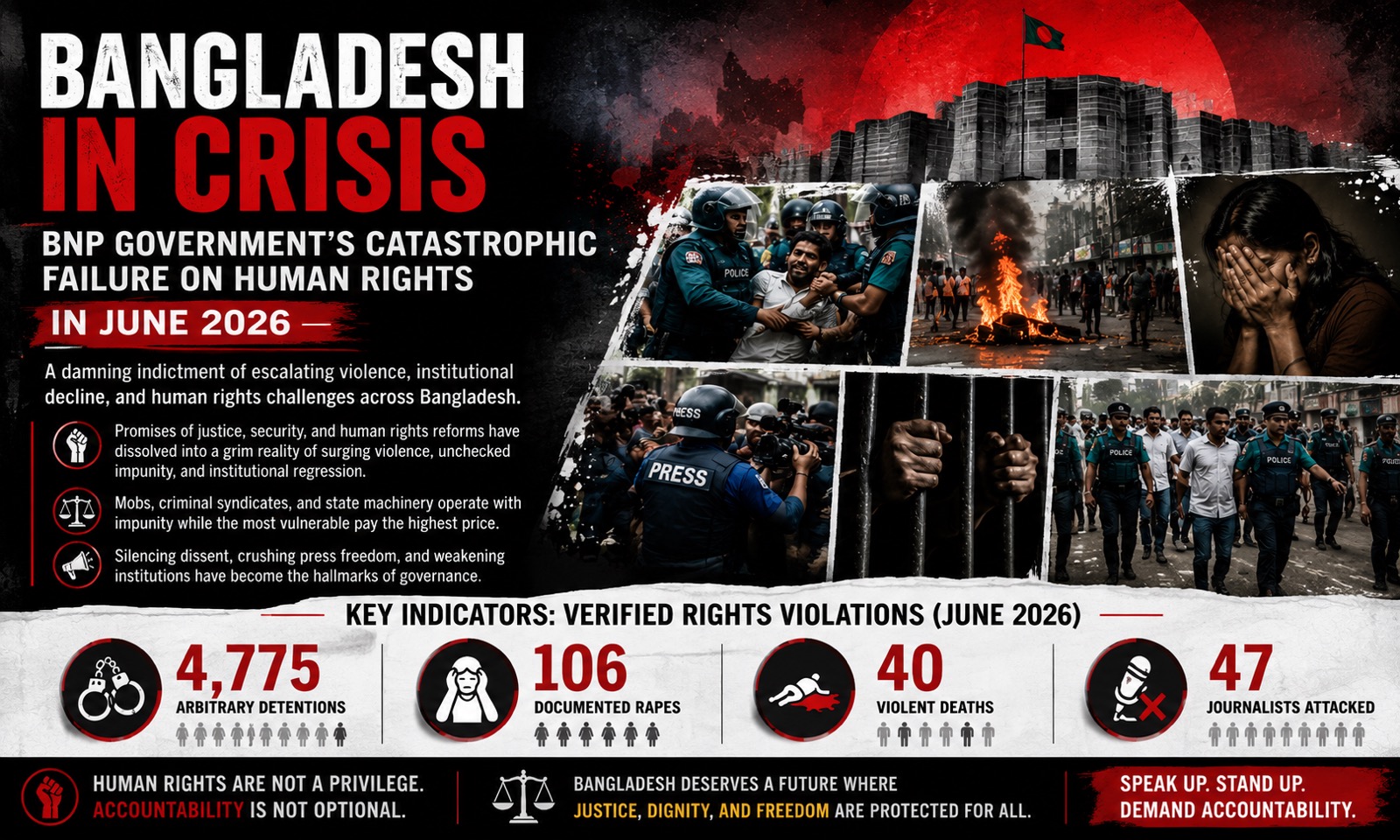
As Bangladesh grapples with the aftermath of political upheaval, June 2026 stands as a damning indictment of the BNP-led government’s failure to deliver on its lofty pre-election pledges. Promises of justice, security, and human rights reforms have dissolved into a grim reality of surging violence, unchecked impunity, and institutional regression. Murders, rapes, assaults, extortion, theft, mob violence, and a litany of other abuses continue to scar the nation, exposing a government more preoccupied with political consolidation than protecting its citizens. Far from the “change” touted by BNP leaders, June revealed a country sliding deeper into lawlessness—one where the most vulnerable pay the highest price while those in power evade accountability.
9 killed in political violence, 31 in criminal incidents in June: HRSS
According to the Human Rights Support Society (HRSS) monthly monitoring report, June 2026 was anything but calm. Nine people were killed and 346 injured in 58 incidents of political violence—a sharp rise from May. Internal BNP feuds alone claimed three lives and injured 146 in 21 clashes, while confrontations involving Jamaat-e-Islami and other factions added to the toll. Extortion, turf wars, and local dominance fueled much of this bloodshed, with attacks on homes, businesses, and party offices leaving a trail of destruction. Over 4,775 arrests were recorded, disproportionately targeting Awami League affiliates, raising serious questions about selective justice and arbitrary detention.
|
Category of Human Rights Violation |
Quantified Incidents (June 2026) |
Direct Casualties / Fatalities Recorded |
|
Political Violence |
58 Distinct Clashes |
9 Dead, 346 Injured (21 clashes driven solely by BNP) |
|
Mob Violence & Extrajudicial Execution |
63 Recorded Incidents |
33 Summary Executions, 69 Severely Injured |
|
Gender-Based Aggression & Rape |
352 Total Victims |
106 Rapes (75 Minors), 19 Gang-Rapes, 57 Domestic Murders |
|
State Censorship & Press Targeting |
39 Target Operations |
47 Journalists Assaulted, Threatened, or Arbitrarily Held |
|
Ethno-Religious Minority Attacks |
12 Coordinated Raids |
12 Temples & 7 Homes Vandalized, 1 Indigenous Woman Gang-Raped |
Mob violence painted an even darker picture. HRSS documented 63 incidents of mob lynching and vigilantism, resulting in 33 deaths and 69 injuries. Allegations of theft, robbery, mugging, religious defamation, and personal disputes triggered these brutal extrajudicial acts. Law enforcement personnel themselves were not spared: 66 officers were assaulted or injured in 29 separate confrontations with mobs. This epidemic of vigilante “justice” underscores the government’s abdication of its core duty—to maintain the rule of law. When citizens take matters into their own hands, it signals not just societal breakdown, but a profound failure of state authority.
The crisis facing women and children demands urgent international attention. In June alone, 352 women and girls suffered violence. Of these, 106 were raped—including 75 minors—and 19 endured gang rapes. Two girls were murdered following rape. Domestic violence claimed 57 lives, injured 48, and drove 36 to suicide. Sexual harassment affected another 94, while 291 children faced abuse, resulting in 54 deaths. These are not abstract statistics; they represent shattered lives in a nation where predators operate with near-impunity. The BNP government’s pre-power rhetoric on women’s safety rings hollow amid this unrelenting epidemic.

While local communities remain defenseless against criminal elements, the state has shown remarkable speed in using its law enforcement machinery to neutralize political rivals. Throughout June, a massive and highly coordinated sweep resulted in the arbitrary arrest of at least 4,775 people across 257 operations. The Dhaka Metropolitan Police (DMP) and regional stations conducted rapid block raids, frequently detaining dozens of individuals in a single evening.
A Setback for Human Rights Protection and Institutional Independence in Bangladesh
Although the government defends these measures as an effort to dismantle members of the banned Awami League (resulting in 1,559 political arrests), the dragnet has intentionally widened to target independent voices and traditional opposition allies. At least 35 members of coalition partners and activists from Jamaat-e-Islami were swept up in the operations. This broad and heavy-handed use of police power reveals a deeply insecure administration that prioritizes suppressing dissent over protecting public safety.
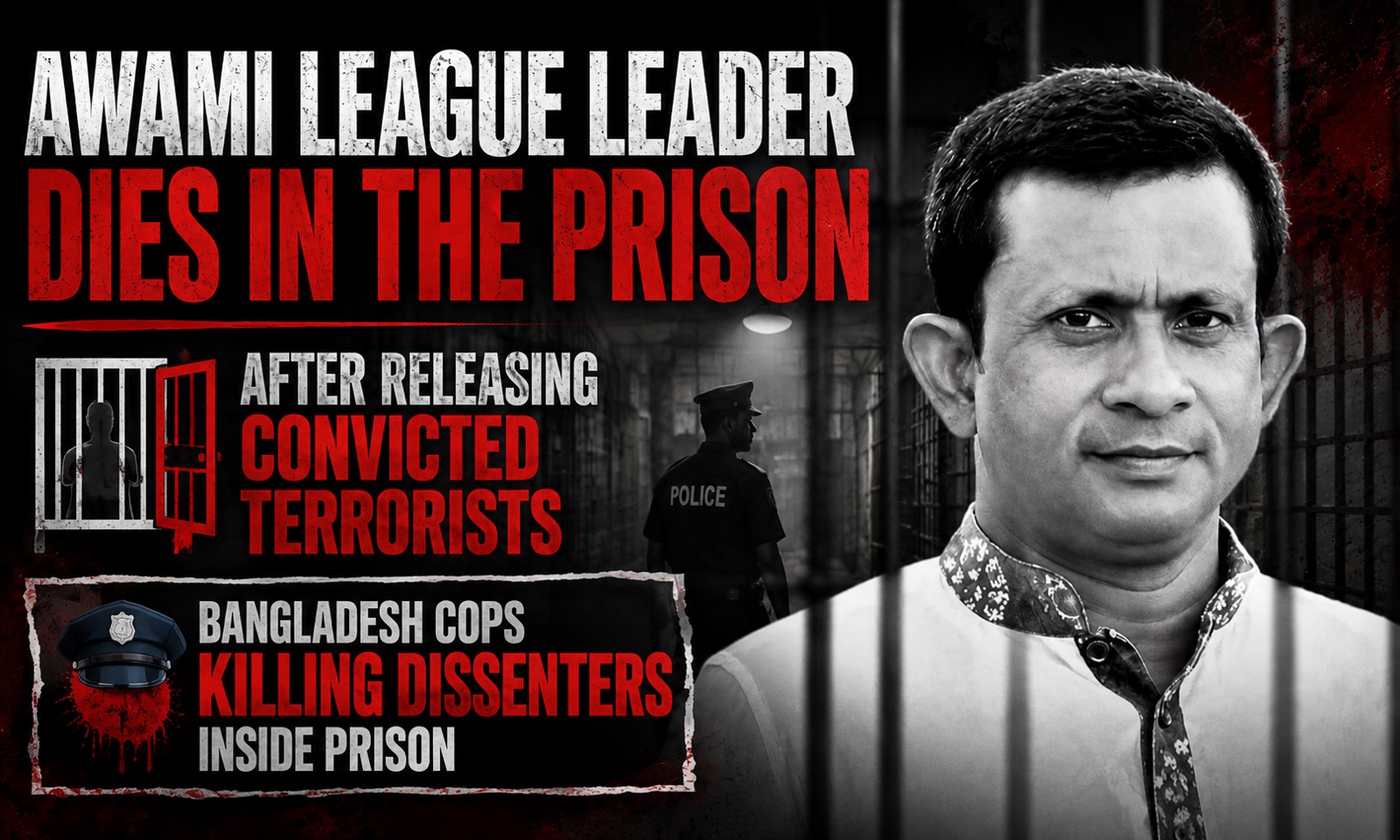
Furthermore, these massive detentions have come with a fatal human cost. At least three individuals lost their lives while in state custody or during active police operations this month. One notable victim died under highly suspicious circumstances while being held by the Detective Branch (DB)—an agency notorious for severe interrogation methods. Despite the BNP’s pre-election promises to fully reform law enforcement and eliminate torture, the return of custodial deaths indicates that institutional abuses remain firmly entrenched.
To keep these governance failures hidden from international scrutiny, the current regime has tolerated a chilling campaign of intimidation against the free press. In June, 47 journalists faced physical assault, threats, and harassment across 39 separate incidents. Reporters attempting to investigate pervasive extortion networks in public transport and municipal markets were met with violence from partisan actors operating with visible police neutrality or protection.
Simultaneously, the administration is moving to structurally weaken the very legal bodies meant to protect its citizens. International organizations, including Human Rights Watch, raised serious concerns in late June over the draft National Human Rights Commission (NHRC) Bill 2026. Watchdogs warn that the proposed law is designed to completely strip the commission of its independence. If passed, the bill will explicitly bar the NHRC from independently investigating human rights violations committed by state security forces. This calculated legislative push creates a culture of permanent legal immunity, ensuring that state-sponsored abuses remain shielded from both domestic and international oversight.
The current government won power by promising to champion human rights and institutional reform, yet its actual administration has delivered a reality where citizens are terrorized by state machinery and criminal syndicates alike. For international trading partners, foreign investors, and global human rights allies, the evidence from June 2026 demands a firm and unyielding response. Remaining silent only validates a regime that is rapidly steering its nation into deep instability and autocracy.


This work is copyrighted and authorized by the Bangladesh Awami League. You may download, display, print and re-produce this material in unaltered form only (retaining this notice)for your personal, non-commercial use or use within your organization.
