10685
Published on July 3, 2026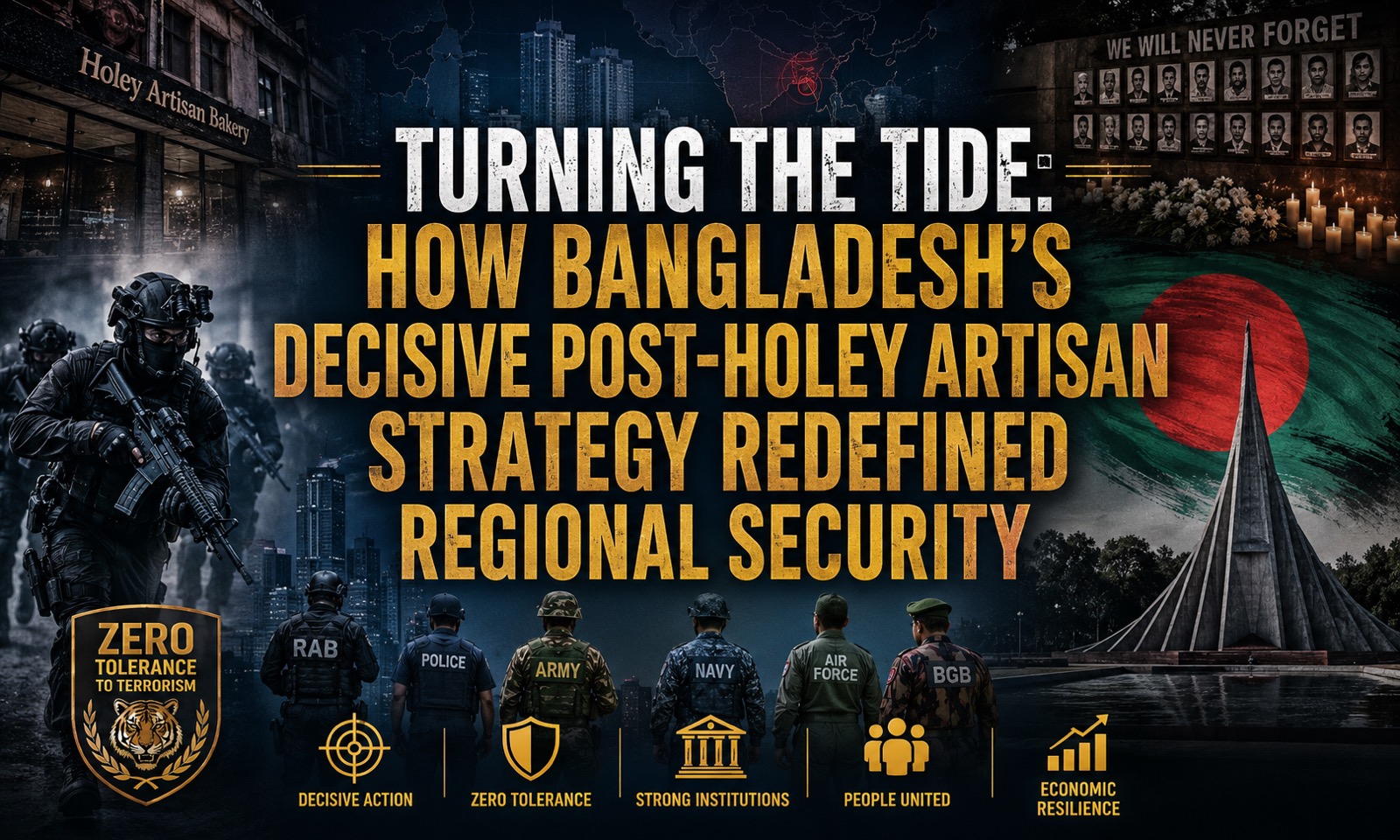
The July 1, 2016 terrorist attack on the Holey Artisan Bakery in Dhaka’s diplomatic zone was a watershed moment for Bangladesh. The tragic 12-hour siege, which claimed the lives of 20 hostages and two brave police officers, sent shockwaves through the nation and the international community. It was a calculated attempt by violent extremists to destabilize the economy, fracture society, and isolate Bangladesh globally.
However, the trajectory of the nation following this tragedy became a global blueprint for counter-terrorism. Under the leadership of then-Prime Minister Sheikh Hasina, the government responded with a zero-tolerance policy, swift operational precision, and a comprehensive long-term strategy that systematically dismantled militant networks.
In the immediate aftermath of the crisis, the Prime Minister took direct command of the security response, coordinating a joint task force comprising the Bangladesh Army, Navy, Air Force, Border Guard Bangladesh (BGB), Police, and the Rapid Action Battalion (RAB).
On the morning of July 2, 2016, the elite 1st Para-Commando Battalion launched Operation Thunderbolt.
Rapid Resolution: Within just 13 minutes of breaching the perimeter, commandos neutralized the terrorists and successfully rescued 13 hostages.
Command Clarity: The operation demonstrated exceptional tactical execution under immense international scrutiny, preventing further escalation in the highly sensitive Gulshan diplomatic area.
Recognizing that tactical operations were only the first step, the government launched an aggressive, intelligence-led nationwide offensive against domestic militant groups, primarily the "Neo-JMB" (Jamaat-ul-Mujahideen Bangladesh).
Specialized units, including the newly formed "Counter Terrorism and Transnational Crime (CTTC)" unit of the Dhaka Metropolitan Police, executed dozens of high-stakes operations. Landmark intelligence successes—such as "Operation Storm-26" in Kalyanpur and subsequent raids in Narayanganj, Gazipur, and Moulvibazar—systematically neutralized top extremist organizers, logisticians, and financiers. Within two years, the leadership hierarchy of these underground networks was entirely dismantled.
The post-2016 strategy moved beyond reactive policing to build robust institutional defenses:
Dedicated Intelligence Upgrades: Security agencies received advanced digital surveillance equipment, forensic toolkits, and specialized transnational tracking capabilities.
The Anti-Terrorism Tribunal: To ensure swift and unyielding justice, the government fast-tracked the legal process. In November 2019, a special anti-terrorism court delivered a landmark verdict, sentencing seven key conspirators of the Holey Artisan attack to death, sending an absolute message of accountability.
A key pillar of the Sheikh Hasina administration's strategy was acknowledging that extremism cannot be defeated by force alone; it must be rejected by society. The government initiated a massive socio-cultural pushback:
"Islam is a religion of peace. In the name of Islam, some people are defaming it... I urge the people of all echelons, including imams, teachers, and guardians, to build a resistance against terrorism."*
— Sheikh Hasina, July 2016 Nationally Televised Address
Community Policing & Grassroots Engagement: The government engaged religious scholars, imams, and community leaders to actively preach against radicalization in mosques and community centers.
Academic Partnerships: Universities and schools implemented strict tracking protocols for student attendance and mental wellness, successfully cutting off the campus-to-militancy pipeline that extremists had begun to exploit.
The ultimate goal of the Holey Artisan attackers was to drive foreign investment, garments buyers, and expatriates out of Bangladesh. The government’s rapid, highly visible security overhauls completely neutralized this threat.
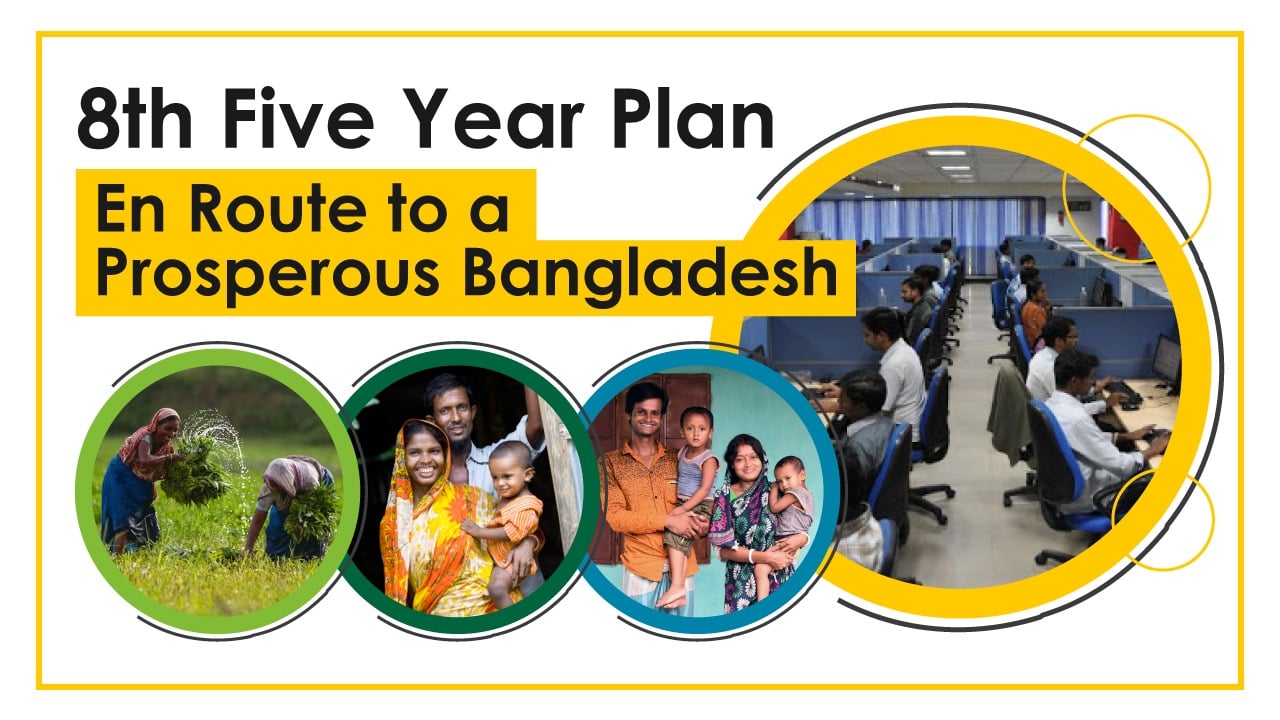
By immediately deploying specialized "Tourist Police" and bolstering security around foreign embassies, export zones, and upscale neighborhoods, the administration reassured international stakeholders. Bangladesh's economy did not falter; instead, over the subsequent years, GDP growth rebounded remarkably, foreign direct investment continued to flow, and the country maintained its trajectory toward graduating from Least Developed Country (LDC) status.
The swift and multifaceted actions taken after July 2016 successfully prevented transnational terrorist outfits from establishing a permanent foothold in the country. By blending tactical resolve with community-wide resilience, the government transformed a moment of profound national tragedy into a definitive victory for peace, secularism, and economic progress.





This work is copyrighted and authorized by the Bangladesh Awami League. You may download, display, print and re-produce this material in unaltered form only (retaining this notice)for your personal, non-commercial use or use within your organization.
