2530
Published on May 20, 2026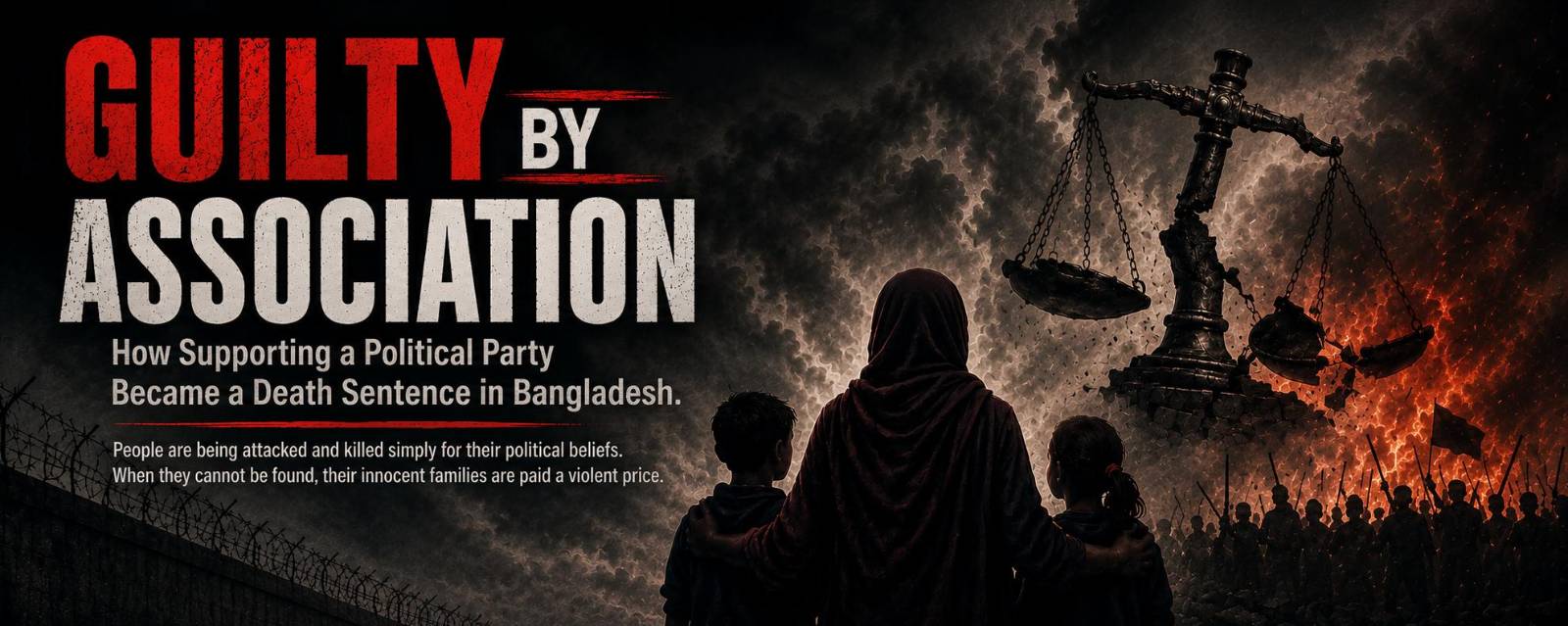
People are being attacked and killed simply for their political beliefs. When they cannot be found, their innocent families are paid a violent price.
A mother, who rushed forward to protect her son from a mob of BNP and Chhatra Dal activists, ended up dead. Why? In the unyielding landscape of modern Bangladesh, the answer is as simple as it is terrifying: her thirty-two-year-old son, SM Imran, had committed the unpardonable "crime" of being linked to a political slogan, “Joy Bangla”.
Woman dies trying to shield son from attack by 'BNP me
Days prior to the tragedy in Ukhiya, Cox’s Bazar, a minor act of political expression, writing the historic Awami League slogan “Joy Bangla” on a local wall beneath an opposition student group's graffiti had prompted local Bangladesh Nationalist Party (BNP) figures to file an arbitrary criminal complaint, branding Imran an official fugitive. When a mob of opposition cadres cornered Imran and his friend on the street, raining down blows with heavy wooden clubs, fifty-five-year-old Saida Khatun did what any mother would do: she courageously rushed out to shield her child from being bludgeoned to death. Instead of pulling him away to safety, she was brutally struck down, collapsing onto the dirt. She was pronounced dead upon arrival at the hospital.
Bloody Ukhiya: The Death of a Mother, or the Blunt Reflection of an Unjust State?
This horrifying tragedy is not an isolated incident of rural friction or localized post-election lawlessness. It is the defining snapshot of targeted attacks on Awami League leaders, activists, and their families that continues unabated in 2026.
The reality on the ground shows that safety no longer exists for anyone connected to the Awami League, even if they have committed no proven wrongdoing. Attacks and killings are rising at an alarming rate, stretching across different districts:
The Attack in Sitakunda
In Chittagong’s Sitakunda, a local youth activist named Zakaria Hasan Jilhan was tricked into leaving his house. Once outside, he was ambushed and hacked repeatedly with sharp weapons. The attack was so brutal that hospital workers could not even find a clear spot on his body to put an IV drip. He had to be rushed to Dhaka in critical condition just to survive.
Chhatra League Leader Suffers 9–10 Machete Wounds in Brutal Attack
The Tragedy in Barguna
In Barguna’s Patharghata, a man named Alam Fitter was brutally beaten inside his own home by a targeted mob. His only "fault" was being the father of a local student union leader. He was rushed to a hospital in Dhaka but quickly died from his severe injuries. When parents are killed as proxies because their children cannot be found, political friction turns into a human rights crisis.
Chhatra League Leader’s Father Allegedly Beaten to Death in Barguna
The Border Ambush
In Netrokona's Durgapur border area, a local party organizer named Biplob Marak was ambushed on the road. A group of armed men hacked him severely and left his body on the roadside to terrify other local grassroots workers into complete silence.
No one should be hunted or hurt because of their political affiliation. Yet, critics and human rights observers are pointing out three deeply worrying trends that are ruining the country's peace:
Punished Without Trial: Grassroots workers who held no power or official government roles are being hunted by mobs simply because their names are put on massive, anonymous lists given to the police by political rivals.
The "Case Business": Local groups are weaponizing the law by filing fake cases against hundreds of people at once. This is used as an easy excuse to extort money, hunt people down, or physically attack them.
Targeting Innocent Families: When political activists go into hiding to save their lives, their family members, including wives and elderly parents, are being targeted instead. Mobs frequently attack their homes, beat relatives, and destroy their properties.
People should not be subjected to violence or killed simply for supporting a political party. Guilt must be proven in a court of law, not decided by an angry mob on the street.
Supporters of the current political setup often try to excuse this violence, calling it a natural reaction to the past government. However, independent critics and political analysts note a highly dangerous shift.
While Bangladesh has always had strong political rivalries, the daily hunting of low-level workers and their innocent families at this scale is completely new.
Critics argue that such incidents did not occur during the Awami League era. Even during times of intense political tension, the family members of opposition leaders were not systematically hunted, and mothers were not killed on the street by political cadres because of their children’s beliefs.
Today, the total breakdown of local security has given armed mobs the power to act as judge, jury, and executioner with no fear of punishment.
This crisis is made worse by a complete failure of the state to protect people, even when they are in official custody or in front of the law:
Deaths in Custody
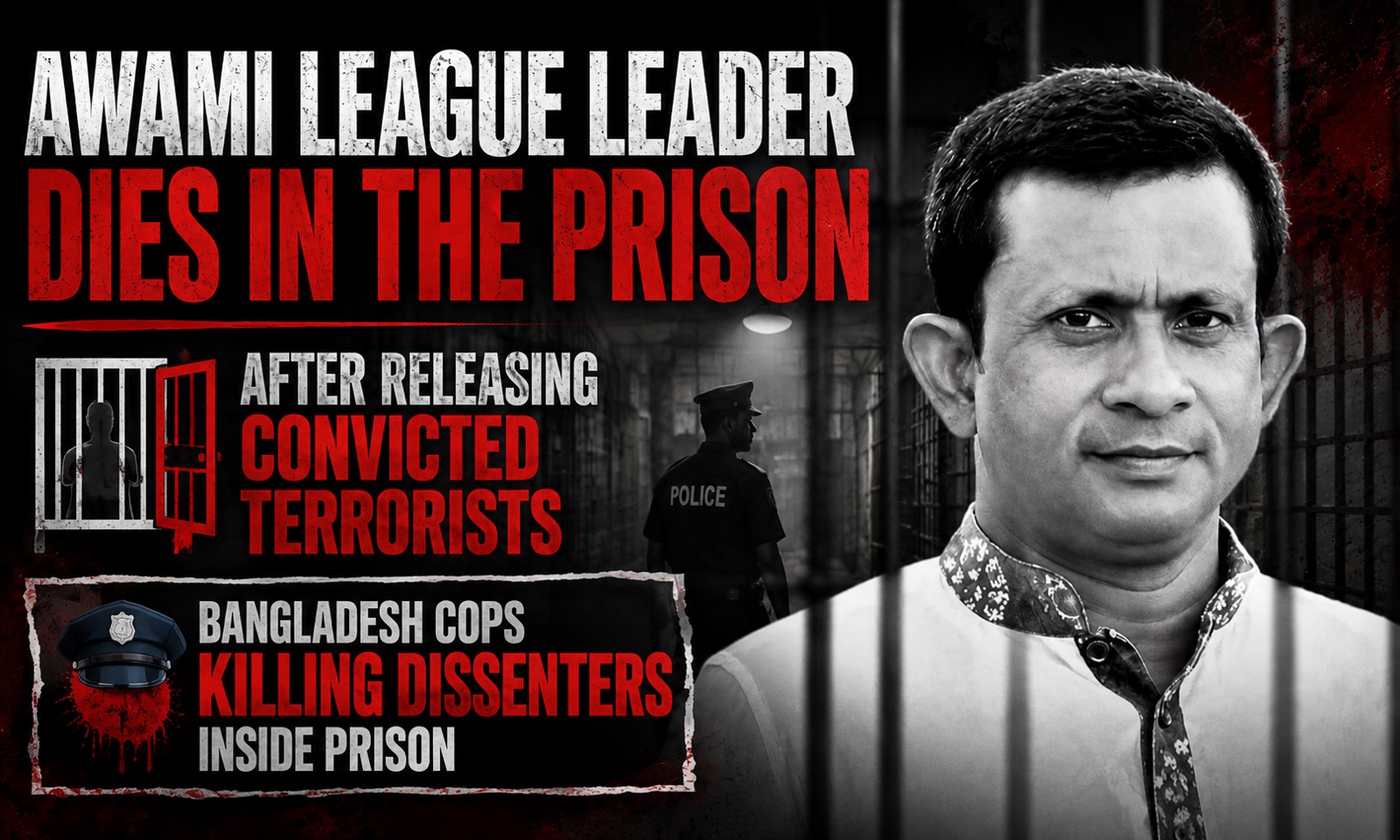
Since the change in power, human rights groups have noted a worrying pattern of deaths inside regional prisons involving detained political figures. When the state locks someone up, it has a duty to keep them safe. Letting detainees die in jail shows a complete collapse of accountability.
Courthouse Mobs
Even worse, when arrested leaders are brought to court, large mobs are allowed to assault them right outside the courtroom perimeters. These individuals are often attacked while handcuffed, while the police escort struggles or fails to protect them. If the state cannot guarantee safety inside its own courts and prisons, the justice system itself fails.
The international community and world leaders cannot afford to stay silent any longer. Treating these horrific events as a minor domestic issue is a dangerous mistake. Human rights belong to everyone, and they do not disappear when a political party loses power.
World leaders must raise their voices now to demand safety, fair trials, and an end to mob rule. If the international community stays silent, Bangladesh will witness an even deeper descent into brutality and endless political violence. The world must act before this cycle of revenge becomes impossible to stop.




This work is copyrighted and authorized by the Bangladesh Awami League. You may download, display, print and re-produce this material in unaltered form only (retaining this notice)for your personal, non-commercial use or use within your organization.
