19542
Published on April 25, 2026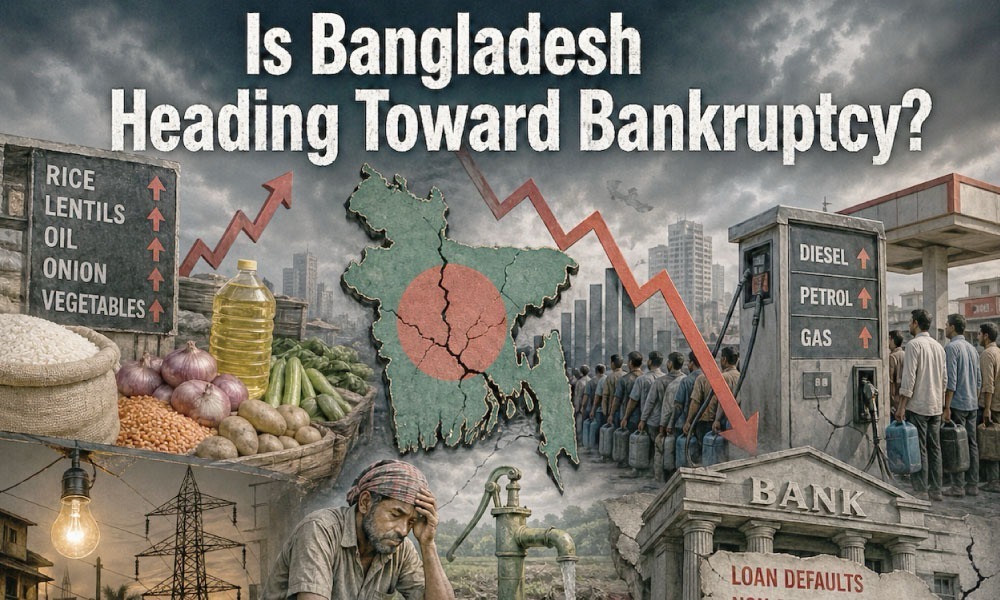
Bangladesh is passing through a deep economic and social crisis, driven — according to critics — by the implementation of a foreign agenda linked to Muhammad Yunus and Tarique Rahman. Rising prices, unemployment, fuel shortages, banking instability, and increasing living costs have turned everyday life into a constant struggle for ordinary people. This pressure is not temporary — it signals the beginning of a deeper structural crisis.
Inflation & Cost of Living: A Silent Blow to Households
The sharp rise in prices is now the most immediate and widely felt crisis. It is no longer just an economic indicator — it directly affects daily life.
Prices of essentials like rice, lentils, oil, onions, and vegetables continue to climb. Low-income families are struggling to meet basic needs, while even the middle class is losing its sense of stability. Market uncertainty persists — prices rise one day and rarely return to previous levels.
This is no longer just “inflation”— it has become a full-fledged cost-of-living crisis.
Fuel Crisis: Pressure on the Economy
Instability in the energy sector, combined with fertilizer shortages, is slowing the economy and triggering a dangerous chain reaction. Rising diesel, petrol, and gas prices are hitting working people hardest.
Impacts include:
This reflects a systemic crisis affecting the entire market.
Healthcare Under Strain
The healthcare system is under severe pressure. Mismanagement and delays in vaccine procurement have been blamed for worsening outbreaks, including measles, reportedly leading to the deaths of many children. Critics argue that administrative failures and policy delays have exposed deep structural weaknesses in the sector.
Power Crisis: Disrupting Life and Production
Bangladesh’s electricity sector is again under strain due to fuel shortages, policy delays, and management challenges. Load shedding has become widespread.
Although installed power capacity exceeds demand, fuel shortages and unpaid subsidies have disrupted supply. Major power plants face difficulties importing coal due to unpaid dues.
Load shedding has now crossed 2,500 MW, despite sufficient capacity—highlighting governance and supply chain issues.
Banking Instability & Economic Pressure
Concerns about Bangladesh’s financial system are growing. Inflation, banking instability, foreign currency pressure, weak loan reforms, and uncertain investment conditions are raising questions about economic stability.
Inflation is no longer just a statistic — it’s visible in daily life:
Delays in loan disbursements due to reform challenges signal concerns about economic management. Weaknesses in revenue collection, banking governance, energy subsidies, and currency management may impact both the national budget and international confidence.
A Critical Turning Point
Bangladesh’s economy stands at a crossroads where policy missteps could have severe consequences.
The economy is not just GDP—it is trust, markets, and people’s livelihoods. And that trust is now under question.
The Bigger Question
With rising prices, banking instability, power shortages, unemployment, and a strained healthcare system, a larger concern emerges: Is Bangladesh being pushed slowly toward bankruptcy?
Economic collapse does not happen overnight—it builds gradually through pressure, policy failures, and structural weaknesses.
So the question is no longer just for experts—it is now on the minds of ordinary people: Is Bangladesh merely under pressure, or heading toward a deeper economic crisis?






This work is copyrighted and authorized by the Bangladesh Awami League. You may download, display, print and re-produce this material in unaltered form only (retaining this notice)for your personal, non-commercial use or use within your organization.
