5792
Published on August 28, 2026
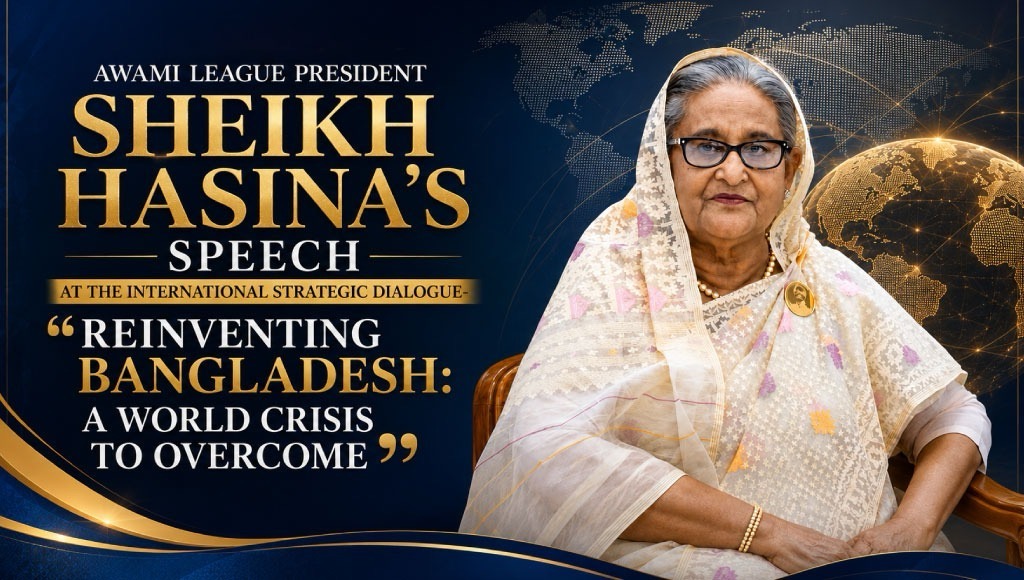
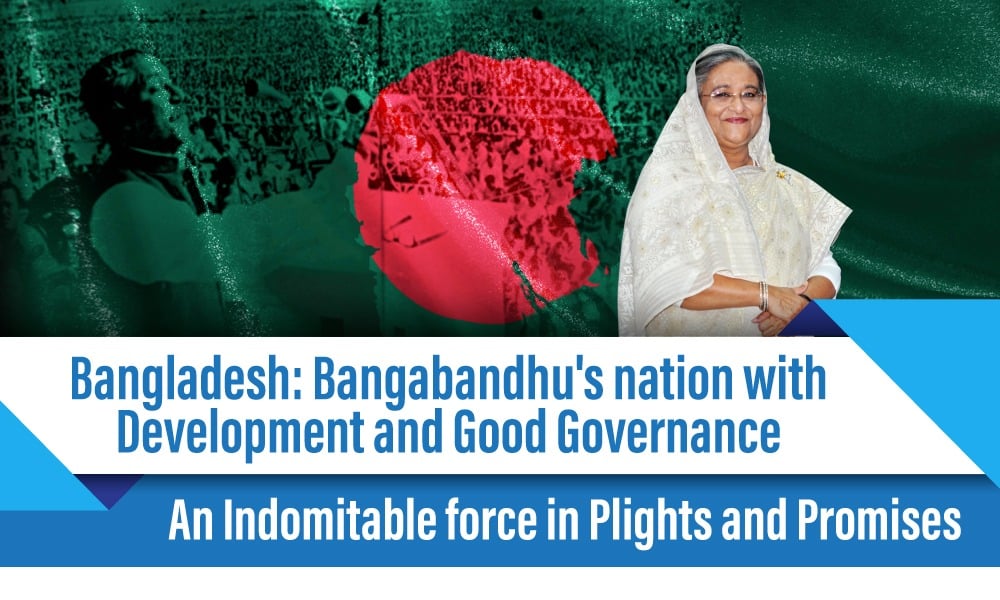
Few political figures in the history of Bangladesh have left as deep, complex and contested an imprint as Sheikh Hasina. To her supporters, she is a symbol of resilience who returned to Bangladesh after the assassination of her father Bangabandhu Sheikh Mujibur Rahman; Father of the Nation and much of her family, fought against military rule and subsequently presided over a period of remarkable economic and infrastructural transformation.
A childhood shaped by politics
Born on 28 September 1947 at Tungipara in Gopalganj, Sheikh Hasina was the eldest daughter of Sheikh Mujibur Rahman, the founding leader of Bangladesh. Politics was inseparable from her childhood. She studied at what is now Badrunnesa Government Girls’ College and later at the University of Dhaka, where she was involved in student politics and the Bangladesh Chhatra League. She graduated from the University of Dhaka in 1973. Her life changed irrevocably on 15 August 1975, when Sheikh Mujibur Rahman and most members of his family were assassinated in a military coup. Hasina and her younger sister, Sheikh Rehana, survived because they were abroad at the time. The tragedy transformed her from a political daughter into a political leader.
Exile and the return of 1981
Sheikh Hasina spent several years in exile, principally in India. In February 1981, she was elected president of the Bangladesh Awami League in absentia. On 17 May of that year, she returned to Bangladesh. Her return took place during a period of military-backed political rule and considerable instability. Over the following decade, she emerged as one of the principal opposition leaders challenging the Ershad regime. The anti-authoritarian movement of 1990 was not the work of a single party or leader; different political alliances and civil-society and student forces contributed to the movement that ultimately forced Hussain Muhammad Ershad to resign. Sheikh Hasina’s Awami League was one of the principal forces in that struggle.
First term as Prime Minister (1996–2001) in government
The Bangladesh Awami League returned to power in the June 1996 parliamentary election, and Sheikh Hasina became prime minister for the first time. Her first administration produced two agreements that remain important in Bangladesh’s political and diplomatic history. In December 1996, Bangladesh and India signed the Ganges Water Sharing Treaty, while in December 1997 the government signed the Chittagong Hill Tracts Peace Accord, seeking to end a long-running armed conflict in the hill districts. Her government also expanded programs in education, food production, social welfare and women’s development. The 1996–2001 period, however, should not be romanticized. Political confrontation between the major parties remained intense, and the country continued to experience strikes, institutional tensions and fierce partisan rivalry.
The years of transformation
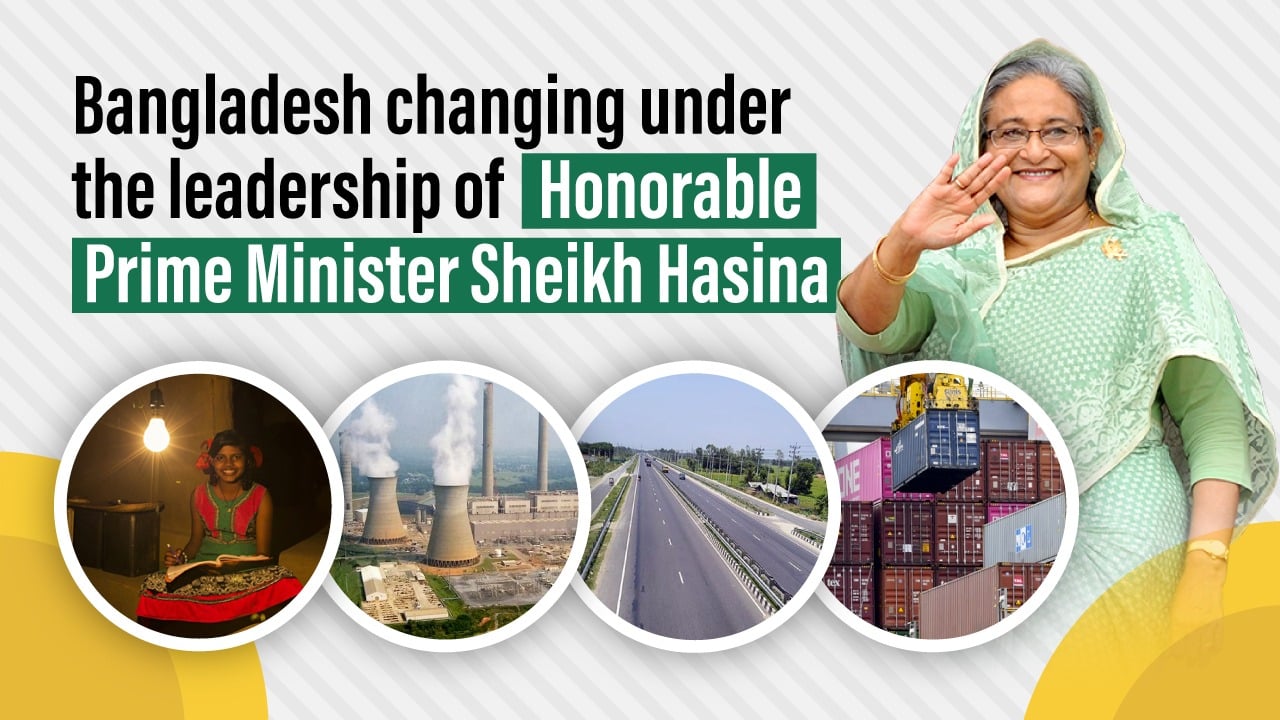
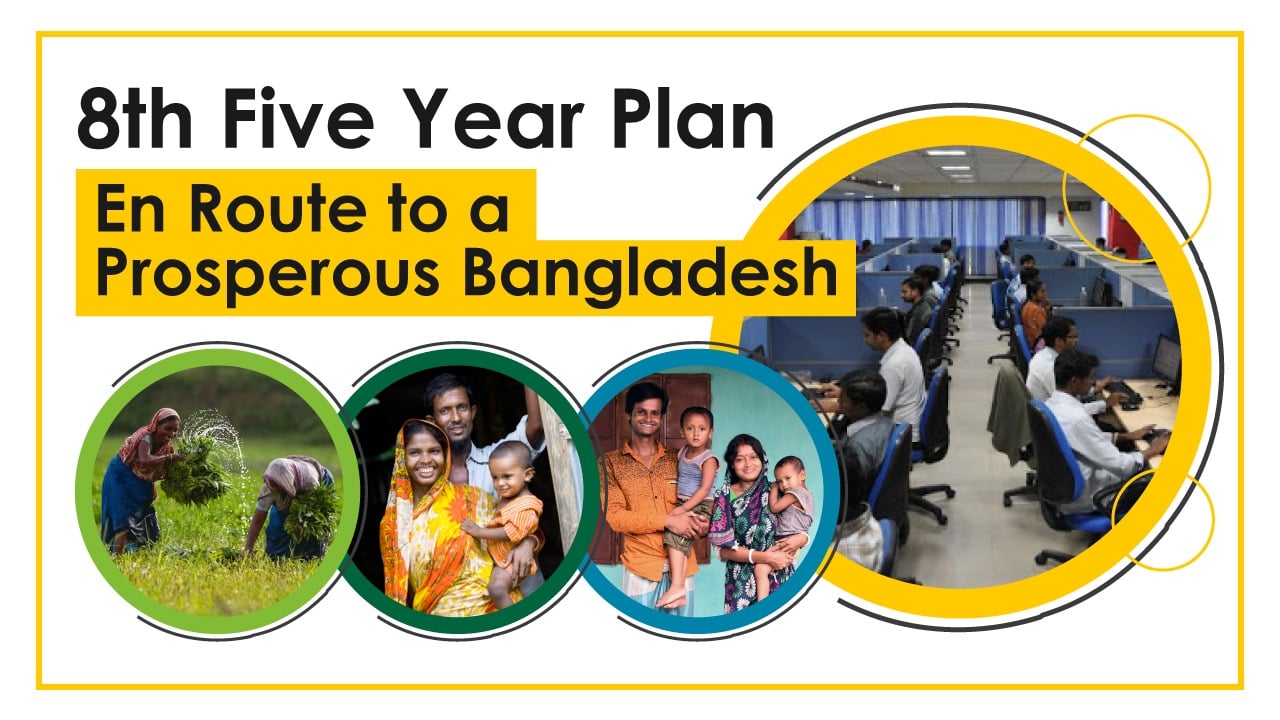
Sheikh Hasina returned to power after the December 2008 election and remained prime minister until August 2024, winning successive elections during that period. Her governments presided over a remarkable expansion of Bangladesh’s economy. World Bank data show nominal GDP rising from roughly $102 billion in 2008 to about $450 billion in 2024 and approximately $456 billion in 2025. Economic growth was accompanied by significant reductions in poverty, expansion of electricity access, growth in exports and remittances, and improvements in several social indicators. At the same time, the later years of her rule also witnessed mounting concerns over inflation, inequality, financial-sector weaknesses and the distribution of the benefits of economic growth.
Infrastructure as a symbol of ambition
Perhaps the most visible symbol of Sheikh Hasina’s development agenda was the Padma Bridge.
The bridge, which crosses the Padma River, became a symbol of national ambition after the World Bank cancelled its financing amid allegations of corruption surrounding the project. The original project was estimated at about $2.9 billion, with the World Bank initially expected to provide $1.2 billion.
The government subsequently decided to finance the bridge domestically. Its opening in June 2022 was presented by the government as a landmark demonstration of Bangladesh’s capacity to undertake a mega-project with its own resources.
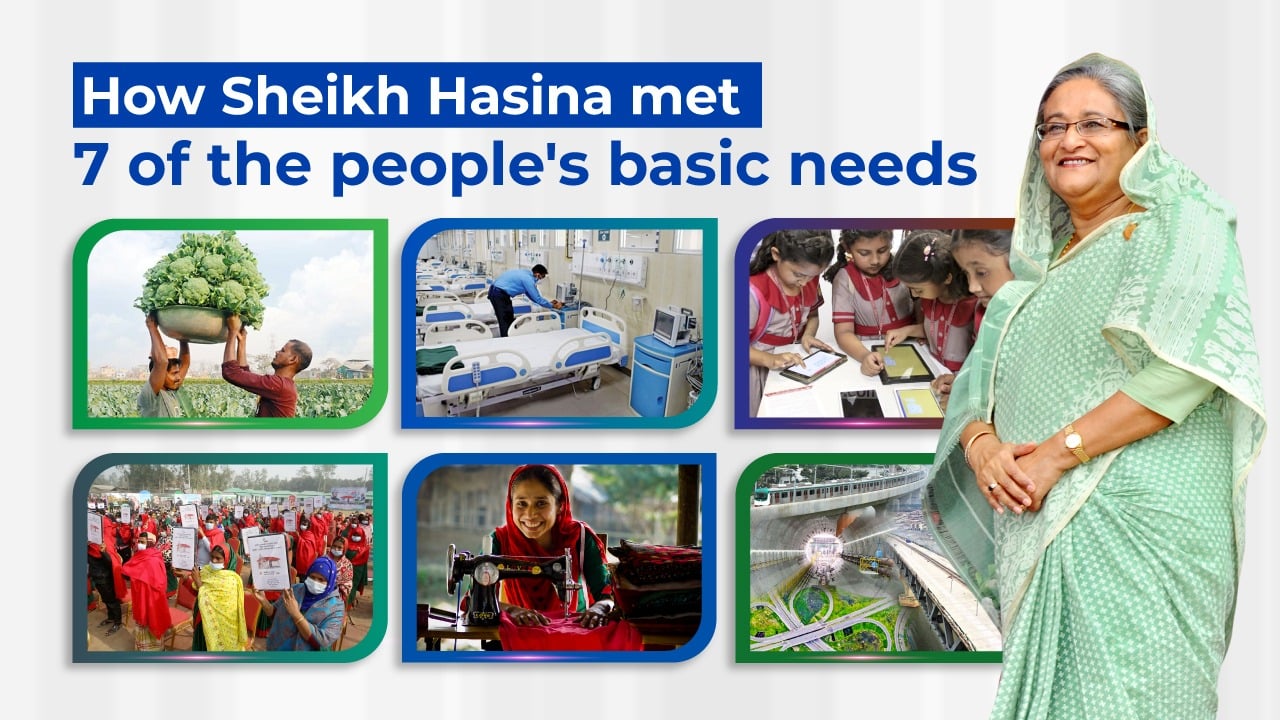
The Dhaka Metro Rail, the Karnaphuli Tunnel, the Dhaka Elevated Expressway, new power-generation facilities and the development of major transport and energy infrastructure further changed the physical landscape of the country.
The Rooppur Nuclear Power Plant and the Matarbari development represented another aspect of the government’s ambition to transform Bangladesh’s energy and strategic infrastructure, although these projects have involved long construction and commissioning timelines and should not all be described as completed achievements.
From Digital Bangladesh to the technology economy
One of the defining political slogans of Sheikh Hasina era was “Digital Bangladesh.” The government promoted internet connectivity, digitization of public services, technology education and the expansion of the information-technology sector.
The launch of Bangabandhu Satellite-1 in 2018 was another highly visible milestone, giving Bangladesh its first communications satellite and placing the country among the states operating national satellite infrastructure.
The broader digital transformation also contributed to the expansion of Bangladesh’s outsourcing and freelancing economy, although the benefits of digitalization have remained uneven across regions and income groups.
Women, education and social development
Women’s participation in education and the labour force expanded significantly during the years of Sheikh Hasina’s rule. Government programs supporting girls’ education, stipends, social safety nets and women’s participation in public life became important elements of the development agenda.
Bangladesh’s experience in girls’ education and women’s participation in the economy attracted international attention. Yet progress has coexisted with persistent challenges, including gender-based violence, unequal access to economic opportunities and barriers to women’s advancement.
The Rohingya crisis
Perhaps Sheikh Hasina’s most internationally recognized humanitarian decision came in 2017, when Bangladesh opened its borders to hundreds of thousands of Rohingya fleeing violence and persecution in Myanmar. The influx eventually brought the Rohingya population in Bangladesh to more than one million. Hasina’s government received international praise for providing refuge, food and basic services despite the enormous economic and humanitarian burden placed on Bangladesh. The episode earned Sheikh Hasina international recognition, although the crisis itself remains unresolved and continues to impose significant social, environmental and financial pressures on Bangladesh.
Immunization and public health
Another achievement associated with Sheikh Hasina’s government was Bangladesh’s immunization program. In September 2019, Gavi, the Vaccine Alliance, presented Sheikh Hasina with its second-ever Vaccine Hero Award, recognizing her political leadership in immunization both nationally and internationally.
Major Milestones and Growth in Power Sector
During the tenure of Sheikh Hasina, Bangladesh’s power sector experienced massive capacity expansion, achieving landmark 100% electricity coverage nationwide and rising generation capacity from 5,000 MW to 33,000 MW. This achievement is undoubtedly a great achievement for any country. Sheikh Hasina’s bold decisions and detailed plans are part of the massive success of the power sector. During the tenure of Sheikh Hasina 122 new power plants were successfully installed and constructed to boost national gride capacity. Yet, her supporters argue that stability and development were only possible under her firm hands.
August 2024 and a legacy still being written
As Bangladesh moves beyond the Hasina era, the full measure of Sheikh Hasina’s legacy remains a matter of history and perspective. For her admirers, she remains a symbol of resilience and stability—a leader who transformed personal tragedy into a long and consequential chapter of national development. Her years in office left an unmistakable imprint on Bangladesh’s physical, economic and social landscape, from bridges, highways and metro rail to power infrastructure, digital networks, education and social programs. Sheikh Hasina, therefore, was more than a long-serving prime minister; she was one of the defining figures of Bangladesh’s post-independence history. Her influence on modern Bangladesh is undeniable. The structures she helped build will endure, but the ultimate judgment of her legacy belongs to history—and that chapter is still being written.
Writer: Aslam Mia is an Advocate of the Supreme Court of Bangladesh.






This work is copyrighted and authorized by the Bangladesh Awami League. You may download, display, print and re-produce this material in unaltered form only (retaining this notice)for your personal, non-commercial use or use within your organization.
