4784
Published on March 10, 2026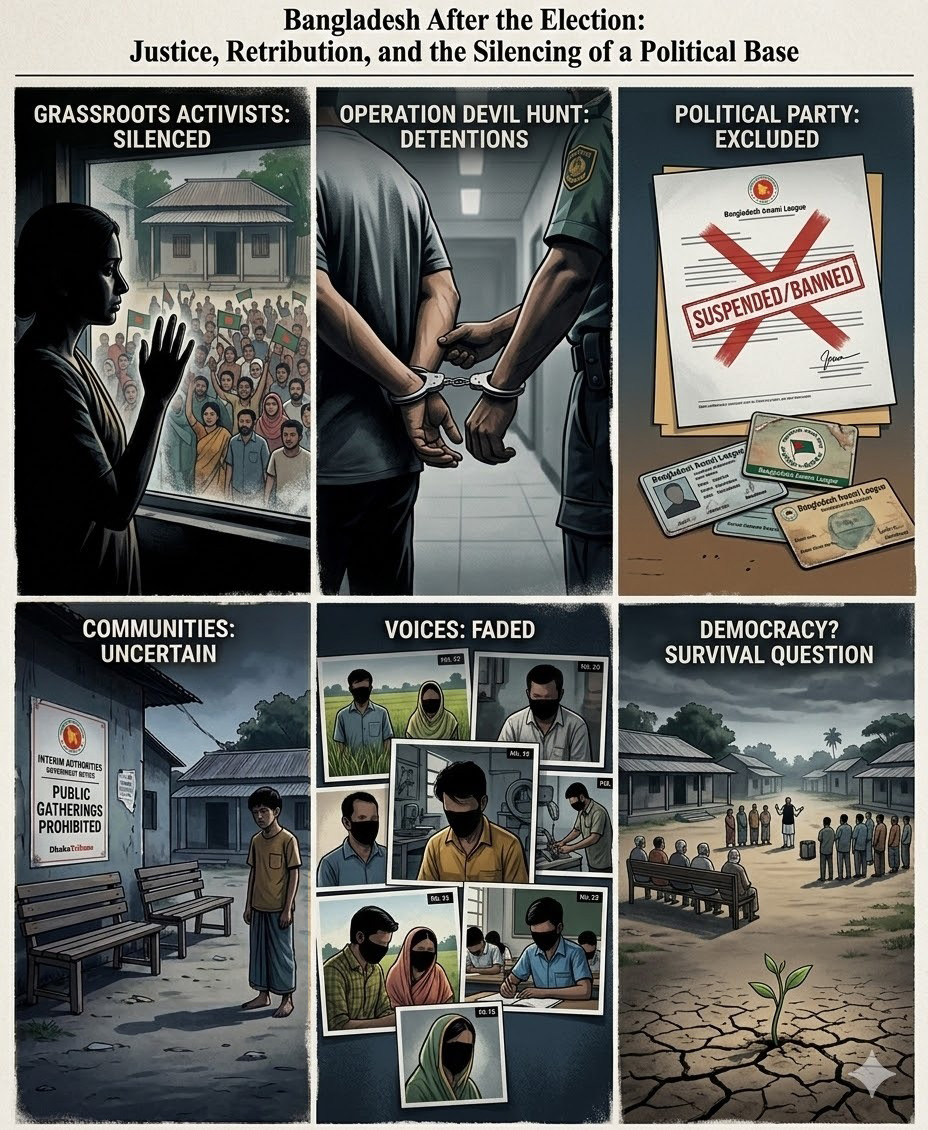
Beneath the headlines about Bangladesh’s 2026 election, a quieter story is happening in towns and villages. Thousands of grassroots political activists, who used to be the heart of both community-level and national politics, are now facing arrests, legal issues, or being silenced after the Bangladesh Awami League faced a ‘temporary suspension’ and was kept out of the election. Families are uncertain and unsettled; communities lose their local leaders; and political voices fade from public life. This article examines the human toll of these changes and raises an important question for Bangladesh’s future: Can democracy survive if a major political group is pushed out of the public sphere?
Bangladesh’s latest election on February 12, 2026, was more than just a political change. It marked the end of a political force that had shaped the country for decades, from independence to prosperity and development. For the first time in recent history, the Bangladesh Awami League, the party that led the fight for independence and stayed in power for much of the last fifteen years, was not on the ballot. The party’s activities had already been banned by interim authorities in 2025 under anti-terror laws and new ordinances. As a result, the 2026 election took place in a very different political environment.
The biggest story in Bangladesh today isn’t just about who won. It’s about what happened after the election, especially to the millions of grassroots activists, organisers, and supporters who once made up the backbone of the Awami League. Across towns and villages, the party’s once-strong network of students, youth groups, and local committees has largely disappeared from public life. Is this silence an accident?
A Nationwide Crackdown
After the 2024 uprising, the new authorities under the Interim Government led by Yunus launched an indiscriminate nationwide crackdown known as “Operation Devil Hunt.” Security forces carried out nationwide raids targeting individuals suspected of connections to the former ruling party, the Bangladesh Awami League. Thousands of arrests followed. Within weeks of the operation’s launch, more than 7,300 people had been detained nationwide, according to police figures reported by The Daily Star. Subsequent phases of the operation markedly increased the number of individuals apprehended. By late 2025, approximately 6,000 additional arrests were reported during the second phase of the operation, according to Dhaka Tribune. Reports from different districts indicated that many detainees were leaders or activists from Awami League affiliate groups, including student and youth wings. For families of detained activists, the legal and political reality feels very different.
The Human Cost of Political Collapse
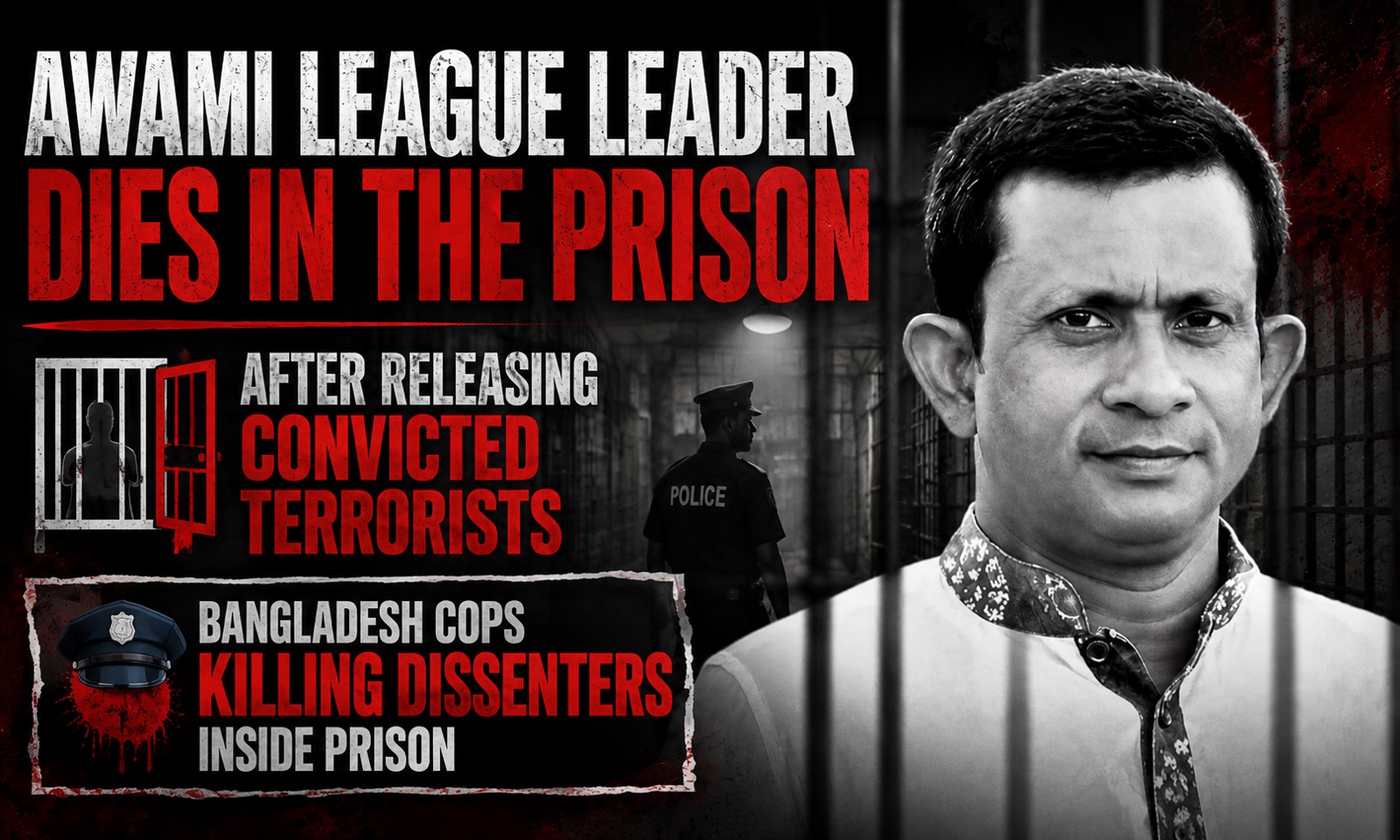
Beneath the numbers lie countless personal stories. Local party workers who once organised rallies and community events now face criminal charges, detention, or live in constant fear of arrest. Often, multiple charges are brought against them, making bail more difficult and prolonging their detention. Just a year ago, many of these victims helped residents access government services, encouraged voting, and hosted local social, political, civic, and cultural gatherings. Now, some are in jail, others are in hiding, a few are in exile, and many have stepped back from public life. Entire community networks are disappearing.
The Logic of the New Political Order
Supporters of the new political regime say that the crackdown isn’t about revenge but about holding people accountable. They see the current trials and arrests as a step towards so-called ‘transitional justice’. However, for the families of victims, who face issues like fabricated murder cases, repeated denial of bail from the judiciary or courts, custodial deaths, unreported detention by a segment of law enforcement agencies, mob violence, and being barred from university, colleges, or work, this process feels more like ongoing punishment than justice. Their pain is genuine and severe. The new leadership, primarily from the Bangladesh Nationalist Party (BNP) and its allies, following the election on February 12 this year, without the participation of the Awami League, argues that the government must investigate crimes committed by the previous regime before rebuilding democracy. But transitional justice is complex; when it looks biased or politically motivated, it damages its own credibility and legitimacy.
The real transition!
An additional question may be raised: the political-cultural transition from the Interim Government facilitated 'Mob Violence’. Justice, ubiquitously and security for all, are therefore functions that could be provided by the incumbent government led by the BNP. Data from human rights organisations indicate that more than a hundred individuals have perished in mob violence across the nation over the past eighteen months. Various surveys suggest that 128 individuals were killed in mob violence in 2024. Furthermore, this figure has risen, surpassing two hundred in 2025. Several such incidents have also been recorded this year, even subsequent to the election.
The Risk of Political Erasure
The bigger question for Bangladesh right now is whether a democracy can truly work if it excludes one of its largest political groups. Even if the Awami League’s leaders are scattered or in exile or hiding or in prisons, its supporters haven’t disappeared. Millions of Bangladeshis have long identified with the party for reasons rooted in ideology, history, or local ties. Silencing that political voice doesn’t make it go away. Instead, it risks driving loyalty underground, where it could surface unexpectedly in more unpredictable and dangerous ways.
Democracy’s Real Test
If thousands of grassroots activists remain trapped in prolonged legal uncertainty, how can the new government claim to pursue transitional justice? The real test for the new government is whether it can pursue justice where any political entity can exist safely. Democracy is not measured only by elections, although the last election was non-inclusive, disenfranchising at least one-third of hardcore supporters and voters affiliated with the Bangladesh Awami League. Democracy is measured by whether every citizen of a nation-state can participate in public life. BNP after the interim, whether it exists to create a new generation of political prisoners.
This work is copyrighted and authorized by the Bangladesh Awami League. You may download, display, print and re-produce this material in unaltered form only (retaining this notice)for your personal, non-commercial use or use within your organization.
